
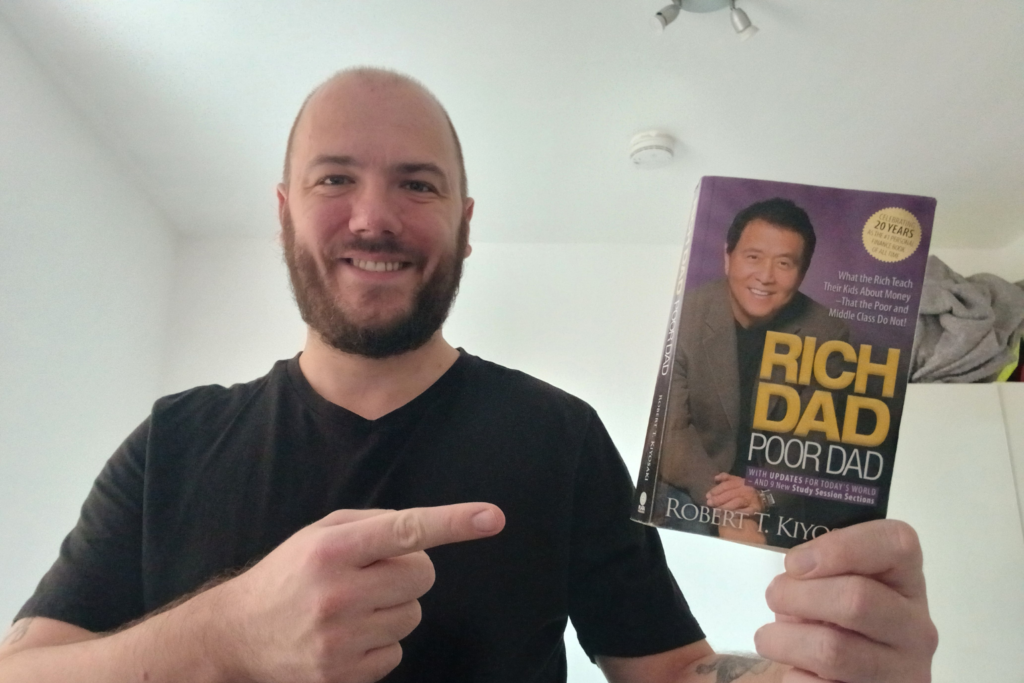
Rich Dad Poor Dad is one of the most well-known personal finance books of all time. So it comes as no surprise that it seems to appear on every personal finance reading list.
I first read this book a few years ago, but honestly, the lessons didn’t really sink in until I read it again more recently.
This isn’t a book full of step-by-step budgeting strategies or specific savings hacks. Instead, it’s more about the mindset and changing the way you think about money.
This is my review of Rich Dad Poor Dad, where I’ve broken down my biggest takeaways from the book, along with some thoughts on how they’ve impacted my own approach to money.
Buy Rich Dad Poor Dad on Amazon now.
What The Book Is About
The book follows Robert Kiyosaki’s story of growing up with two father figures.
First, there was his biological father (his “poor dad”) who was well-educated and worked a stable government job. His poor dad believed in job security, getting a good education and playing it safe.
There was also his friend’s father (his “rich dad”) who was a self-made businessman and believed in taking calculated risks, building assets and making money work for you.
Throughout the book, Kiyosaki compares the advice he got from both dads, and explains how those opposing views helped shape the way he thinks about money.
If I had to summarise Rich Dad Poor Dad, I’d say it’s a book about opening your mind to a different perspective about money. Whether you agree with him or not, the core messages definitely make sense.
My Key Takeaways
Here are the eight biggest lessons I took from Rich Dad Poor Dad:
1. Assets vs Liabilities
When I talked about calculating your net worth, I mentioned the difference between assets and liabilities.
Traditionally, especially in accounting terms, we’re taught that assets are things you own — like a house, jewellery, or even a car — and liabilities are things you owe — like a loan. But Kiyosaki’s definitions are completely different.
“An asset is something that puts money in your pocket. A liability is something that takes money out.”
So under his definition, your house and car aren’t actually assets, but liabilities, as they cost money each month with things like maintenance, taxes, etc.
True assets are things like rental properties, dividend-paying stocks, anything that earns you money passively.
As someone just starting my financial journey and trying to clear my debts, this was a huge mindset shift. It made me realise that saving alone wasn’t enough. I needed to eventually start building assets.
2. The Rich Don’t Work For Money
This is one of the main ideas in the book. I had to digest this for a while because this goes against everything we’re taught growing up. Most of us grow up being told to work hard, get a good job and earn more. But Kiyosaki argues against this.
He argues that most people work their entire lives to earn money, but never take the time to learn how money actually works. He says that rich people invest into learning, buy income-generating assets, then use those assets to achieve financial freedom.
“The rich don’t work for money, they have money work for them.”
He’s talking about building your assets column — investments, businesses, royalties, etc — that earns you money without trading precious time for it.
Right now, I’m nowhere near the position where I can invest or build assets, but it’s something to aim for once I’ve paid my debts off.
3. It’s Not What You Make, It’s What You Keep
Kiyosaki says that most people think their income is the problem, but it’s really their spending habits that hold them back.
It doesn’t matter if you make £25k or £1million, if you spend everything you earn, you’re not building wealth.
If you only earned £25k and saved just a small amount each month, you’d still be doing better than a person on £100k who spends it all.
That’s why I now track every penny and stick to a budget, whilst trying to create better financial habits, such as saving at least 10 percent of my income. This book played a big part in showing me why that matters.
4. Most People Play It Safe (Out of Fear)
Kiyosaki talks a lot about fear. He says fear is what keeps people stuck in jobs they don’t like, living paycheck to paycheck.
And although it sometimes seems like he is against jobs altogether, I do see his point.
Playing it safe feels comfortable, but there’s often an invisible ceiling that comes with that. Sometimes playing it too safe is the riskiest thing you can do.
I realised I’d been stuck in survival mode for years, too afraid to take any risks or make changes. This makes people feel stuck and miserable, they’re almost crippled by their own fear.
Trust me, I’ve been in the same position of sacrificing my mental wellbeing by staying in a job longer than I should have done.
5. Build Assets, Not Just Income
This was another mindset shift for me.
Kiyosaki says the rich focus on acquiring assets, while the poor and middle class focus on just increasing their income. The logic is simple, income stops the moment you stop working. If you choose your assets wisely, money will keep coming in, whether you’re working or not.
It’s easy to say “I’ll start investing once I earn more.” But this book made me realise it’s more about starting where you are, instead of waiting for the perfect opportunity.
I know I’m not in a position to invest just yet, not while I still have debt. However, I can still invest in learning and building skills.
6. Work to Learn, Not Just to Earn
This was one of the more subtle lessons in the book, but it stuck with me.
Kiyosaki says that every job is a chance to learn. Working isn’t just about getting paid, it’s also about gaining new skills that will help you build something of your own one day.
That mindset will help me approach the next job I have. It won’t just be “I’m stuck in this crap job.” I’ll ask “What can I learn that will help me down the line?”
And even now, while building this blog and creating content, I see this journey as part of the learning process.
Basically, build your value, not just your paycheck.
7. Financial Education Is Our Job
One of Kiyosaki’s main arguments is that schools don’t teach us enough about money. If we want to understand money, we have to take responsibility ourselves.
That’s exactly why I started PoundWise Journey.
I wanted to use this blog as a platform to share everything I learn while on this personal finance path, while also sharing my wins and setbacks along the way.
I’m not perfect and I’ve made a lot of financial mistakes, whether that’s from ignorance, impulsive behaviour, or simply not knowing any better. But I’m taking the initiative to learn from my mistakes and hopefully learn to become financially literate.
Final Thoughts
I hope you enjoyed this review of Rich Dad Poor Dad.
If you’re just starting your financial journey, or feel like you’ve been stuck in the same place for too long, this book could be exactly what you need. This isn’t the type of book that will tell you how to budget or even what you should invest your money into. But it does give you an alternate way of thinking about money.
It’s not about becoming rich overnight, it’s about changing your mindset about money and laying the foundation to build wealth over time.
If you want to check it out yourself, get it here on Amazon.