
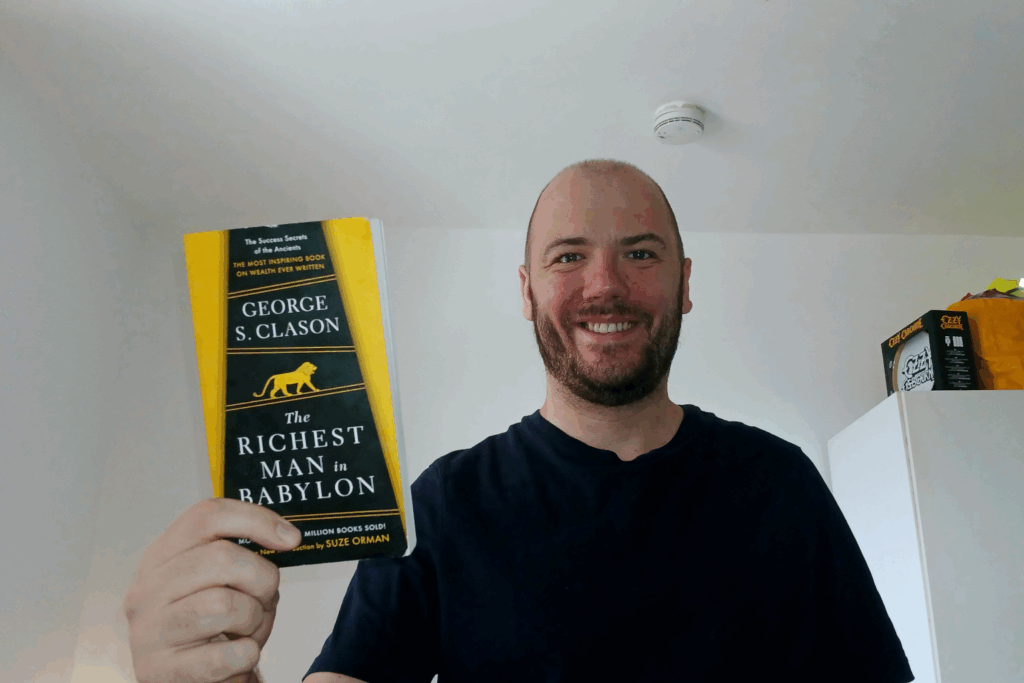
In this post, I’m sharing my honest review of The Richest Man in Babylon, from the perspective of someone who’s over £2,000 in debt, unemployed, and actively trying to turn their finances around.
This is a book that’s been on my bookshelf for a long time, but for some reason, I never got around to reading it.
It often comes up in personal finance discussions, especially among people who are just starting out.
Now that I’ve finally read the book, I can see why so many people recommend it.
I’ll share what I liked, what I didn’t like, and how I plan to apply these lessons.
So let’s get into my review for The Richest Man in Babylon.
About The Book
The Richest Man in Babylon was written by George S. Clason and published in the 1920s. However, the main story is set in ancient Babylon.
The main character is a man named Arkad, who once lived in poverty and eventually became the wealthiest man in the city. As his reputation grew, two of his old friends, Bansir and Kobbi, went to him for advice.
Arkad’s teachings are the main lessons in this book.
Each chapter is essentially a lesson about money, but the lessons are a part of the story, which makes them easier to digest.
What I Liked
1. The Advice is Timeless
Although the book is set in ancient Babylon, you can easily apply the advice to any time period.
It often talks about earning gold, bartering, and using slaves. This language is outdated and can even sometimes be uncomfortable.
However, if you translate these terms to apply to the modern world (e.g., income, value exchange, resources), then the advice is still relevant today.
2. It Gets to the Point
One thing I liked about this book is that it doesn’t drag things out. It’s a short book that you can easily finish in just a few hours, and it gets to the point quickly.
Compared to a lot of other books that usually have a lot of filler, and spend fifty pages getting to the actual point, this book cuts right to the chase.
As someone who isn’t always able to focus for long periods of time (thanks, ADHD), I found the short chapters and clear structure really helpful.
3. The Book Teaches By Telling Stories
I don’t normally read fiction, so I wasn’t sure how I’d feel about the storytelling approach. But that was the biggest appeal of this book.
Instead of just listing out financial rules, you follow the characters and become invested in their story as they learn and apply those lessons. It draws you in emotionally, and makes the lessons more memorable.
It’s a reminder that we often learn from other people’s experience, even if that experience is fictional.
What I Didn’t Like
1. The Early Modern English Style
This was probably what I didn’t like most about the book. The book is written in the style of Early Modern English with uses of archaic English pronouns, like thee, thou, thy, and thine. This can make some parts harder to get through if you’re not an avid Shakespeare reader.
It fits the ancient Babylon setting, but it also slowed me down a bit. I had to reread a few paragraphs just to figure out what was being said. If you struggle with concentration or just don’t have the patience for the old-style phrasing, it might be a barrier for you.
2. It’s Easy to Misinterpret
This isn’t really the book’s fault, but it is something I have thought about. Because it talks about gold, bricklayers, and lending to shield makers, some people might take the advice literally.
You need to mentally translate everything into modern terms:
- Gold = income/savings
- Lending = investing
- Bricklayers = side hustles/trades
- Slaves = income generating assets (obviously this term is heavily outdated)
If you don’t mentally translate these terms, it might feel like the advice is very outdated and irrelevant to the modern world.
What I Learned
Reading this book has taught me that financial success is mostly about consistency and discipline. This is something I’ve always struggled with. Here are the main lessons that have stuck with me:
- Pay yourself first: Save at least 10% of your income before spending on anything else.
- Live below your means: Keep your expenses under control and prioritise needs over wants. A lot of my debt came from trying to maintain a lifestyle I couldn’t actually afford (my trip to Amsterdam for example).
- Make Your Money Work for You: Invest your savings wisely to generate more income and build wealth.
- Protect Your Wealth: Build savings and an emergency fund. Avoid risky investments.
- Continuously Learn and Improve: Invest in yourself to increase your knowledge and earning potential.
- Your mindset matters: Most successful people build wealth slowly, through habits, not luck.
How I Will Apply These Lessons
I don’t have a regular income right now. I’m living on benefits, in debt, and just trying to make better financial decisions each day at a time. But the message of paying yourself first has really stuck with me.
I will try to save 10% of my income as soon as I get paid, whether that’s from benefits, or when I eventually get a job. If I am only able to save 5%, it doesn’t matter at this point. It’s not about the amount, it’s about building the habit.
While I am in debt, I will be using most of these savings to pay off my credit card faster. But I also realise that I need an emergency fund, so I’ll allocate some of these savings towards that too.
When I’m in more of a secure financial position, I will also aim to build my wealth by making my money work for me. I’m not sure at this point what I will invest my money into, I’ll cross that bridge when I get there. My main priority right now is to pay off my debt and build an emergency fund.
The book reminded me that good financial decisions are usually boring. But they’re safe, and consistent, and that’s what I need right now.
Who I’d Recommend it To
If you’re new to managing money and trying to figure out where to start, this is a great book to build a strong foundation.
If you’re the kind of person who finds finance boring or overwhelming, the story-based format of this book might work in your favour. It doesn’t feel like a standard textbook or instruction manual.
Although this book won’t give you modern strategies, it’s more about building the mindset and habits that will set you up to succeed.
Final Thoughts
The Richest Man in Babylon hasn’t fixed my financial situation and won’t fix it overnight, but it’s helped me change the way I think about money. It’s reminded me that consistency is key, and that anyone can change their lives if they have the right mindset.
I’m still figuring things out, but this book has made me feel like I can move forward slowly, and one habit at a time.
Thanks for reading my review of The Richest Man in Babylon.
If you want to check it out yourself, get it here on Amazon.